From programming events to penning novels, curating physical release extras, and founding the renowned Miskatonic Institute of Horror Studies, Kier-La Janisse is a well-known figure in the world of film. But one thing the Canadian creative had never turned her hand to previously was directing her own narrative feature film, a daunting challenge she tackled in the return of Severin Films' The Haunted Seasons this Christmas.
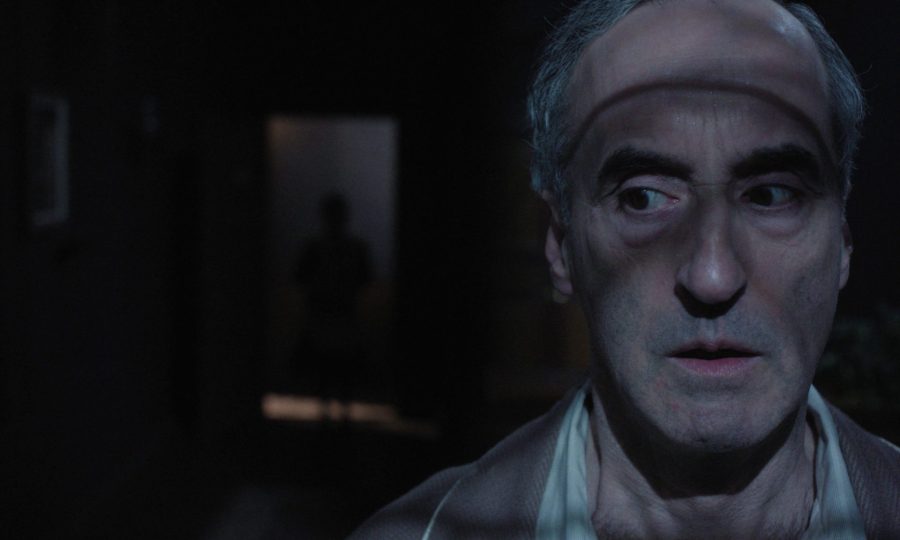
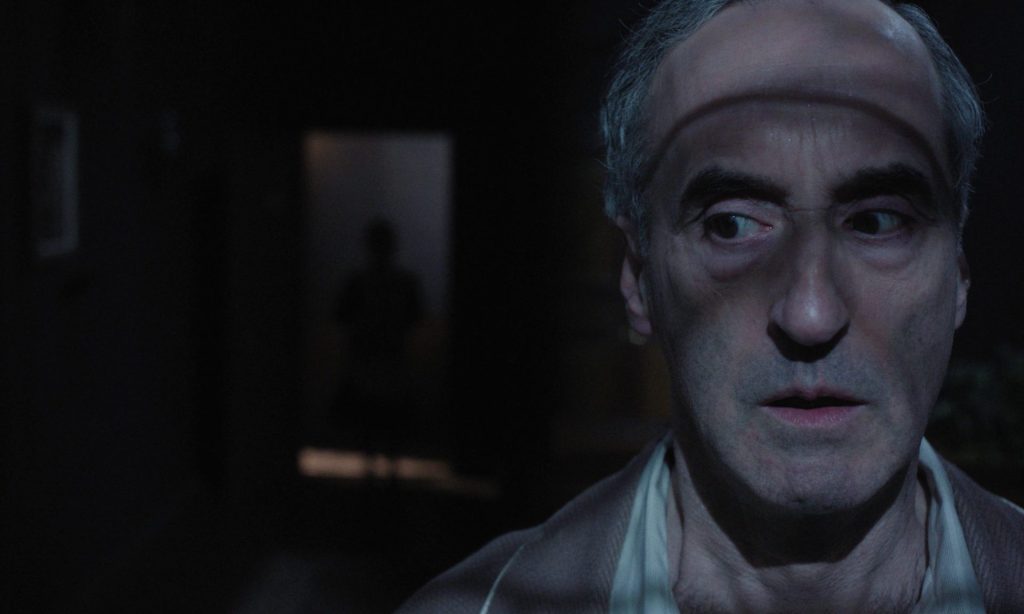
In Janisse's installment, The Occupant of the Room, based on the short story by Algernon Blackwood, we follow teacher Minturn (Don McKellar), who arrives late at night in the heavy snowfall at the remote Alpine hotel without a reservation. He is offered a room that was previously used by a missing guest, which he accepts, but is plagued by an eerie night filled with mysterious presences and bizarre dreams that lead him to feel he is not alone. a The Occupant of the Room arrives on Shudder in time for the festive period, FILMHOUNDS spoke to Janisse about the logistics of her narrative directorial debut, the film's unique artistic choices, and the popularity of Christmas horror films.
The Occupant of the Room is your narrative directorial debut after years of working in the film industry. What inspired the leap?
It was a complete change. A lot of my other projects have some crossover where there are some transferable skills, you know, but this was 100% new. I had to write a narrative script for the first time – I'd never written dialogue for characters or anything – I had to work with actors, and I had to direct people. Luckily, I had friends who were producing the film, so they did a lot of the work of hiring the crew and stuff like that, because a lot of that I would never have known how to do. My cinematographer, Karim Hussain, is a very, very old friend of mine. I knew right from the beginning that he was going to help me make this film, and that made me feel a lot more comfortable about the process. Otherwise, I feel like it would have been too daunting, so having Karim there was a really important anchor for me.
It was definitely a big jump, and it was never planned. I never wanted to make narrative films. I had started the series The Haunted Season, and we had a director who was originally going to do this year's episode, and then she ended up getting greenlit for another stage of development for one of her feature projects. So she had to switch to working on that. In the meantime, I had to find a new person to write and direct an episode for this year, but there wasn't a lot of time. It's a very low-budget series, so at least if you can't give people a lot of money to work with, you can give them time so that they can plan things properly, try to collect props, or whatever. I didn't want to rush anyone else into it, and I had this ghost story by Algernon Blackwood that I would read every year for Christmas Eve. I just thought, “You know, I'm so invested already in this idea of these ghost stories for Christmas, and I have this one favorite ghost story. So maybe I should try to make one myself.”
Even so, I still kept trying to get out of it. The whole time I was working on it, if another director expressed interest, I'd be like, “Oh, do you want to direct it?” I kept trying to just get out of it, because it was so far out of my comfort zone. But then the pieces started to click. The actor that I had in mind when I wrote the script said yes. When you'rewriting dialogue for the first time, I had to picture somebody saying the lines to know if they would work or not. I had to hear somebody's voice saying them. I kept picturing Don McKellar saying the lines, but when it came time to cast the movie, I never thought in a million years he would say yes. I wrote it with him in mind, and to my great surprise, he said yes. It just kind of fell together, which I took as a good sign.
I must mention the score of this film. It is incredible. How did you decide on The Occupant of the Room's unique sound?
A couple of years ago, a friend of mine sent me some tracks by Anju Singh, who's had a noise project called The Nausea. I kept her in my back pocket, wanting to use her music for something. When it came time to do this project, I contacted her and asked her to do the music, and this was before we shot the film, so I was picturing scenes as I was writing them. I was picturing them with her music, and I knew that it was not the traditional kind of music that you would have stories for Christmas. But that was a way that I thought I could make a film that felt both very traditional, but had this other element to it that seemed more to my taste. I wanted it to have this very aggressive score and eerie sound design.
The song that plays during the animation sequence, that is a song that she already had. But then I went to her, and I said, “Okay, using that song, knowing that this is the sound I like, let's make original music for the whole rest of the movie.” Then she just started composing pieces individually. She composed a piece for each character, and then we would mix and match them throughout the movie. We also broke out pieces of the music that she designed, like little screeches and things like that, then we would embed them in the sound design. Her music is a hugely important part of it, because I saw the film at one screening where they had the volume really low, and it just didn't work. I mean, it was just boring. Her music really made a massive difference in how effective the film is.
I also love the animation in the film; it really adds to the dark, oppressive atmosphere. How did that come about?
I knew that I wanted to have a sequence where he goes away mentally, because I love movies where it almost seems like it becomes something else for a minute, and then you get brought back. Like episode eight of Twin Peaks, where you have this sequence that's just like, “What the fuck was that?” So I knew I wanted to have something like that, which meant that visually it had to be different. I didn't know at first whether it was going to be an animation or not; I just knew that it was going to be something very different.
I knew I wanted black and white, andI knew I wanted collage animation. Something where the protagonist's image could be ripped, fractured, and broken to show his identity breaking. I went on Instagram, and I just typed in keywords, then this woman, Anna Malina, came up. She's a Ukrainian animator based in Germany, and her style was exactly what I wanted. All of her Instagram posts were GIFs, so I didn't know if she could do longer-form stuff. I contacted her, and it turned out she had read my book, House of Psychotic Women. It was a total fluke, and she said yes instantly. I showed her the script so that she could see what I had written as happening in that sequence, and then, when we filmed footage, I would send it to her. She would take each image and manipulate it to create a four-second animated piece. Then she would give me each image individually to stick them all together and make the sequence. It was a really collaborative process, and most people say it's their favourite part of the movie.
It joins the pantheon of Christmas horror films. What do you think it is about the festive season that lends itself to horror?
I think there are a couple of reasons. The old reason is that winter's tales predate Christmas celebrations. The idea of gathering around the fire in the dark and telling scary stories is something they were doing hundreds of years before Christmas became a popular holiday. So it's more to do with the season than that specific holiday, which is also why my series is called The Haunted Seasons. Aside from that, there are a lot of people who hate Christmas because they just find it so obnoxious in so many ways. It offers this flip side to that holiday, where people who normally look at Christmas as this incredibly stressful time can have this bizarro version of the holiday through horror. I think it serves a couple of purposes.
Of the horror fans I've talked to, they all love Christmas horror. It's one of the things I always tell filmmakers asking me what they should do early in their careers. Make a Christmas movie or write a Christmas song. Every year, your film will get programmed somewhere. I sort of like the tradition of The Ghost Stories for Christmas. They don't necessarily take place at Christmas or have anything to do with Christmas; it's not a requirement. But in mine, I wanted to have a connection to Christmas because it just bridges both the older winter tales and the modern celebration of Christmas.
Severin Films' The Haunted Season: The Occupant of the Room is now on Shudder
Podcast